SiRIUS Lab
Smart Resilient Infrastructure and Urban Systems
The SiRIUS Lab advances digital twins, sensing technologies, and AI-enabled decision support to strengthen infrastructure and communities facing earthquakes, extreme wind, flooding, fire, and climate-driven hazards.
Our research integrates infrastructure systems, people, data, and models to understand compounding risks and guide resilient planning, design, and recovery.

Drawing inspiration from Sirius, the most luminous beacon in our night sky, SiRIUS Lab leads the way in pioneering solutions for infrastructure resilience!
Methods
Digital Twins & Monitoring
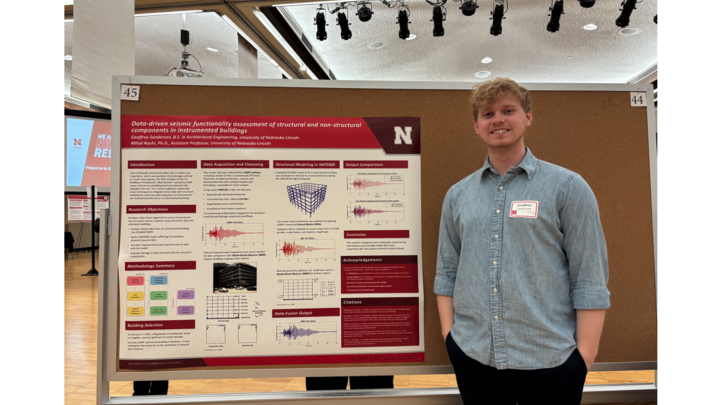
We develop physics-based and data-driven digital twins of buildings and infrastructure using sensing, data fusion, and structural health monitoring to capture system behavior before and after extreme events.
Hazards
COMPOUNDING HAZARDS
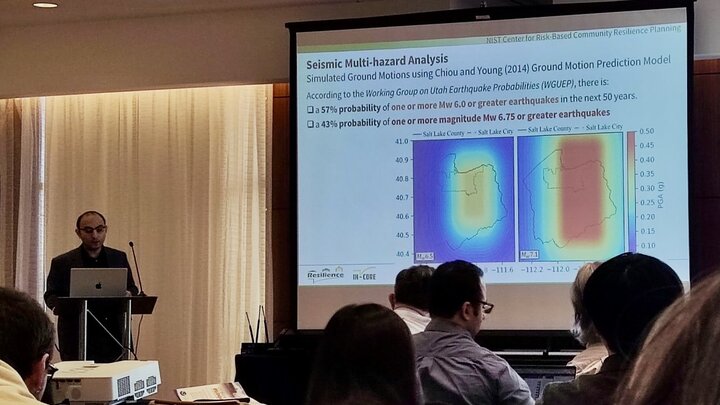
Our research addresses interacting hazards—including earthquakes, extreme wind, flooding, fire, and climate change—capturing cascading impacts across infrastructure systems and communities.
Applications
Resilience & Decision Support
We translate complex models into actionable insights through community resilience modeling, recovery simulation, and decision-support tools for planners, engineers, and policymakers.
Why SiRIUS?

A SYSTEMS-LEVEL APPROACH TO INFRASTRUCTURE RESILIENCE
Infrastructure systems do not fail in isolation. A single hazard can trigger cascading disruptions across transportation, power, water, healthcare, and social systems, magnifying losses and islowing recovery.
At the SiRIUS Lab, we take a systems-level view of resilience that integrates infrastructure performance, human behavior, data, and decision-making. By combining sensing technologies, digital twins, and Al-enabled models, we seek to understand how hazards compound across systems and how communities can plan, adapt, and recover more effectively.
Our work emphasizes transparency, interpretability, and equity, ensuring that advanced analytical tools support real decisions made by engineers, planners, and communities facing increasing climate and hazard risks.
Funding & Partnerships
SiRIUS Lab is supported by federal agencies, state and local partners, and university programs advancing multi-hazard resilience, digital twins, and decision support for communities.